Written by: Dr. Andrew Akhaphong, DCN, MS, RD, LD, Mackenthun’s Fine Foods Registered Dietitian
Updated: February 5, 2026
When cholesterol runs high, advice like “avoid red meat,” “cut out red meat,” or “eat more plants” is often among the first recommendations from healthcare providers. Although these strategies can improve cholesterol levels in some individuals, added sugars are a common dietary factor that can contribute to elevated cholesterol. Added sugars refer to sugars that are incorporated into foods and beverages beyond what occurs naturally. Examples include honey, cane sugar, table sugar, high-fructose corn syrup, agave syrup, and similar sweeteners.
Why Are Added Sugars in Food?
Sugars are added into food for specific reasons.
Have you thought about how heavy whipping cream in its liquid form transforms into the light and fluffy topping we use for pancakes and waffles? When heavy whipping cream is agitated with a whisk, slowly adding sugar increases the thickness of the cream; thus, strengthening the proteins and trapping air bubbles to create whipped topping.
Like salt, sugar acts as a preservative for canned goods like jams, jellies, pickles, and candied fruit. Sugar pulls water out of spoilage-causing bacteria, yeasts, and mold which dehydrates and kills them. This interaction allows us to enjoy our canned goods safely.
Sugar helps yeast do its job in baked goods. As yeast consumes sugar, it releases carbon dioxide, which gets trapped in the dough and makes it rise during proofing and baking.
Some whipped topping on a spoon that is dusting sugar crystals. Image Source: Stock Cake
How Does Added Sugar Affect Cholesterol?
After sugar is broken down into glucose, it enters the bloodstream as blood sugar. To keep levels balanced, the pancreas releases insulin and glucagon. When blood sugar rises, insulin directs glucose into the liver, muscles, and fat for energy or storage as glycogen. If there’s more glucose than the body needs, the liver can turn the excess into cholesterol. Cholesterol helps the body make hormones like testosterone and estrogen and absorb nutrients like vitamins D and A. But when LDL, or “bad” cholesterol, builds up more than the good, it can increase the risk for heart disease. Our liver can also turn excess glucose into a fatty acid called triglycerides. Oftentimes higher triglycerides lead to high LDL cholesterol levels.
Reducing Added Sugars
The Dietary Guidelines for Americans 2025-2030 recommends no more than 10-grams of added sugar in each meal or snack consumed each day. For some people this can be challenging! Look for products that are labeled “no sugar added”, “no added sugar”, or “sugar-free”. Many products that are labeled keto-friendly and Whole30 also contain little to no added sugars!
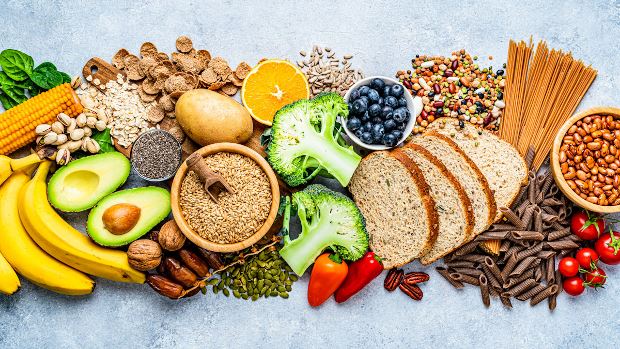
Dietary fiber slows sugar absorption by soaking it up during digestion, helping prevent rapid spikes in blood sugar. Women need about 25-grams of fiber per day while men need about 38-grams of fiber per day. To put this into perspective, the average American eats less than 10-grams of fiber per day. Click here to review a brief list of high-fiber foods.
If it is difficult to consume enough fiber from food, consider a fiber supplement. Products like Metamucil®, BeneFiber®, and Citrucel® may be helpful. Before using a fiber supplement, check with your provider, pharmacist, or registered dietitian to make sure it’s safe and appropriate for you.
Some examples of food that contains dietary fiber. Image Source: fcafotodigital/iStock/Getty Images Plus/Getty Images