


Written by: Dr. Andrew Akhaphong, DCN, MS, RD, LD, Mackenthun’s Fine Foods Registered Dietitian

Updated: February 18, 2026

Americans eat a lot of meat. According to a 2023 USDA survey, the average intake is about 225 pounds per person each year, including beef, pork, turkey, and chicken. A 2025 study by the North American Meat Institute and the Food Industry Association also found that 80% of Americans identify as meat eaters. With this context, it’s easy to see why advice to avoid red meat for heart health can feel stressful and leave many people wondering what’s left on the menu.
 
Your Mackenthun’s Fine Foods is here to support you in navigating these recommendations.

What is Red Meat?

When most people think of red meat, beef comes to mind—but it’s only part of the picture. Red meat includes meats from mammals such as pork, lamb, mutton, veal, goat, and venison. What classifies meat as “red” isn’t simply its appearance, but its myoglobin content. Myoglobin is a protein that stores oxygen in muscle tissue and gives meat its darker color—it is not blood, despite common misconceptions. Although pork appears lighter in color, it contains more myoglobin than poultry like chicken and turkey. The red liquid often seen in raw or packaged meat is actually water released from the muscle tissue mixed with myoglobin.
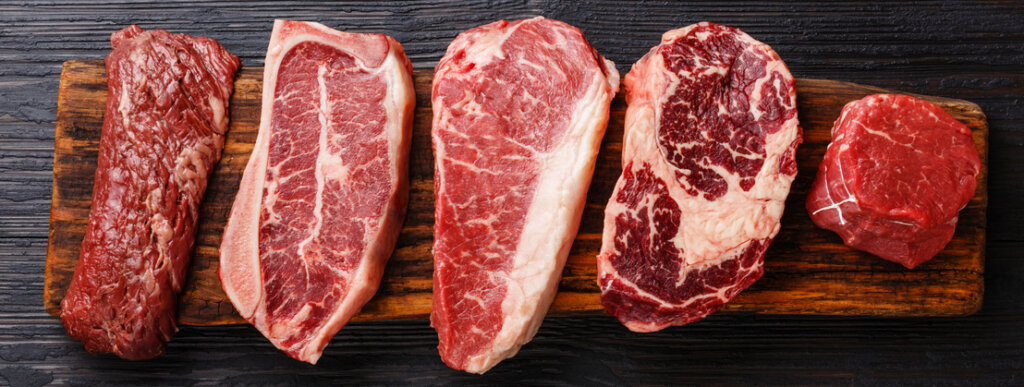
An assortment of steak cuts with different marbling content. Image Source: iStock

Enjoy Your Red Meat Mindfully with Indulgence

When it comes to red meat, quantity matters—but so does the cut. Prime rib is a higher-fat option, and eating it daily at every meal may increase your risk for heart-related concerns. So what do we do?
 
Not all beef is created equal—there are at least 30 lean beef cuts that can fit into a heart-healthy eating pattern. Examples of lean beef cuts include New York strip steak, chuck roast, and country-style beef ribs. These cuts are leaner because they have less marbling and less of a fat cap, which means more protein in each portion. Since these cuts are leaner, how you cook them matters—using the wrong method can cause the beef to dry out and become tough.Click here for a chart on all the cuts of beef and their recommended cooking method. 
 
Pork isn’t off the table—there are at least 21 lean pork cuts that can work well in a heart-healthy eating pattern. Most come from the leg or loin, with examples like pork tenderloin, ham steak, and baby back ribs.Just like lean beef, lean pork can also easily dry out and become tough with the wrong cooking method. Click here to review the chart on pork cuts and their recommended cooking techniques. 

Looking Beyond Meat Fat

While eating leaner red meat cuts supports a heart-healthy diet, many lean red meat options are packed with nutrients that support heart health!
 
Vitamin B12 plays a role in heart health by helping manage homocysteine, a protein our body produces during normal metabolism. Too much homocysteine can stress the heart, and vitamin B12 helps keep it in check.

Iron helps the body produce hemoglobin, which allows red blood cells to transport oxygen throughout the body. It also supports vitamin C absorption.
 
Zinc plays a role in supporting normal heart rhythm and maintaining the integrity of heart muscle tissue.